



Monicca Yan, Managing Director at Kestria China & Singapore, interviewed Lai Siong Wong, APAC Product Lead at BASF, to discuss the future of biological solutions in agriculture, the evolving regulatory landscape, the commercial potential of biostimulants and the key trends shaping sustainable farming across Asia-Pacific. The conversation also explores the challenges and opportunities surrounding market adoption, innovation and the role of biological solutions in supporting the next generation of crop protection and agricultural productivity.
Disclaimer: The information and views shared by Lai Siong Wong in this interview are her own and do not represent BASF’s position on the topics discussed.
What role will biological solutions play in the future of agriculture in Asia-Pacific?
Biological solutions are generally divided into two categories. The first is biopesticides, which can be applied below ground as seed treatments or above ground as foliar sprays. They include beneficial bacteria that suppress fungal diseases, fungi that act as parasites of certain insects, and nematodes that are mass-produced to control insect pests.
Biopesticides remain challenging to register. In Europe and the United States, regulators are familiar with these products and recognise them as environmentally friendly technologies, allowing for faster registration pathways. In China, however, the situation was very different before COVID. Biopesticides were regulated much like chemical pesticides, with registration taking around four years and requiring extensive data that, from a Western perspective, was not always relevant. Although the Chinese government has since simplified the process, it has introduced a new requirement: microbial strains must be listed in the Chinese database. If a strain is not included, applicants are subject to additional regulatory scrutiny and data requirements.
How does the classification of biological products influence their registration requirements and market access across different countries?
Below-ground biological applications include seed treatments, inoculants and biofungicides. At present, I am not aware of any commercially established bioinsecticides in this category.
In India, however, the term biopesticide has a different meaning. Products that would typically be classified as biostimulants are not necessarily recognised as biopesticides. Awareness of biological solutions remains relatively low, and the regulatory framework often combines biological products with abamectin, a chemical insecticide. As a result, these products may appear highly effective, but from a Western perspective they are not considered purely biological because they contain a chemical active ingredient.
Climate is another important factor. Biopesticides generally perform better in cool, dry or temperate environments than in hot, humid regions such as Southeast Asia.
Biostimulants, by contrast, include products such as zinc, seaweed extracts and amino acid-based formulations. Their growth has largely been driven by regulatory challenges. Europe became the first major market to adopt biostimulants because they generally require little or no registration and are regarded as environmentally friendly, biodegradable solutions.
Around 2018–2019, China emerged as a major biostimulant market. Following Syngenta's introduction of seaweed-based products, many local companies developed their own innovations. Today, China has a well-established biostimulant industry and exports these products across Southeast Asia.
The key distinction lies in regulation. Where registration is required, biostimulants face a relatively simple and inexpensive process. Biological pesticides are subject to more demanding requirements, while chemical pesticides remain the most heavily regulated category.
How can industry and regulators work together to accelerate the adoption of biological solutions?
From my perspective, industry advocacy should primarily be led through CropLife, which is well positioned to represent the sector. The challenge, however, is that the association is largely driven by a relatively small number of major industry players. As a result, advocacy efforts often require prioritisation, with companies focusing on the markets where regulatory engagement is most critical.
Biostimulants, however, are a different case. In my view, the regulatory framework is relatively simple, with few specific requirements in most markets. As a result, these products can generally be launched much more easily than conventional crop protection products.
What opportunities and challenges do you see for bio-stimulants in rice cultivation?
The biggest challenge is market access. Smaller companies, such as CC or Caltec, do not have the resources to deploy large sales teams to engage directly with farmers. As a result, they typically partner with major crop protection companies such as Bayer, Syngenta, Corteva and BASF, which have the field presence and distribution networks needed to reach growers. From that perspective, the first barrier to biostimulant adoption is go-to-market capability, while the second is cost.
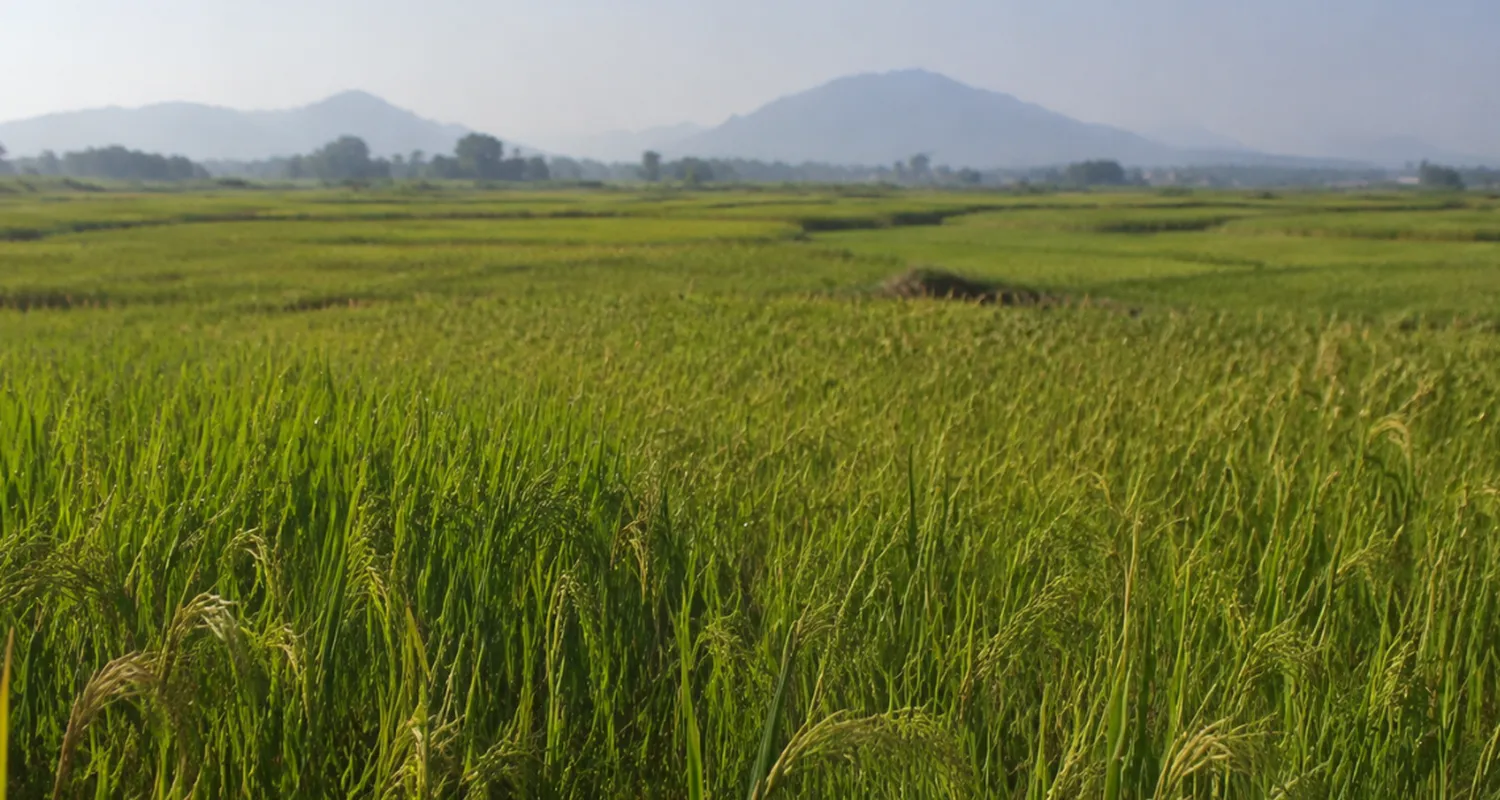
Rice provides a good example. Broadly speaking, there are high-value horticultural crops and row crops such as rice, wheat and corn. Farmers growing row crops generally invest relatively little in crop protection. Excluding fertilisers, they are unlikely to spend more than around US$60 per hectare per season. That budget must cover herbicides, insecticides and fungicides, leaving very little room for additional products. As a result, biostimulants must be competitively priced. While the market potential is significant, it is also highly price-sensitive.
For this reason, we initially focused on the fruits and vegetables segment. Growers of crops such as lychee, oranges, tomatoes, chillies, brinjal and cucumbers are more willing to invest because of the higher value of their produce. More recently, the rapid growth of China's biostimulant industry has enabled us to in-license products from local companies and expand their use into rice cultivation. That is how we have gradually entered the rice market.
What is driving the growing adoption of bio-stimulants across Asia-Pacific?
From the company's perspective, one of the main drivers behind biostimulants is the increasing difficulty of registering new chemical compounds, coupled with the growing challenge of discovering new active molecules.
China illustrates this well. The country places strong emphasis on locally generated regulatory data, and over the past four or five years, with the exception of Syngenta, very few multinational companies have launched new products there. Global companies are reluctant to accept Chinese data because concerns over laboratory standards and toxicity studies could jeopardise registrations in highly regulated markets such as Europe and the United States. As a result, regulatory differences continue to delay product launches.
In Europe, biostimulant adoption has been driven primarily by the green transition, whereas in Asia government protectionism has played a greater role. With fewer regulatory barriers than conventional crop protection products, biostimulants allow multinational companies to continue bringing innovations to market. This is one of the main reasons they have become such an important focus in recent years.
What drives farmers to adopt bio-stimulants: sustainability or ROI?
In an ideal scenario, farmers would say they care about sustainability. In reality, however, their primary consideration is return on investment. The key question is simple: if I invest US$1, how much more can I harvest?
For example, if a farmer spends US$50–60 per hectare on crop protection and adds another US$1 for a biostimulant, that investment could generate an additional 100 kilograms of rice, resulting in a positive return. When farmers see that economic benefit, they are willing to adopt biostimulants.
Biostimulants are designed to enhance existing crop protection programmes rather than replace them. Like multivitamins, they strengthen plants, improve resilience and increase yields. As long as farmers see a clear return on investment, adoption will grow.
However, biostimulants remain supplementary products. During periods of severe disease pressure or adverse weather, farmers will prioritise products that directly control pests and diseases because biostimulants enhance plant performance rather than provide protection. Sustainability is important, but for most farmers, investment decisions are ultimately driven by economic returns.
How do bio-stimulants complement fungicides and fertilisers to improve plant health and crop productivity?
Just as our diet does not always provide everything we need and we therefore take supplements, plants also benefit from additional support. Traditionally, crop protection has focused on solving a specific problem. A fungicide stops or prevents disease, but it does not address the fact that the plant has already been compromised and must still recover. This is where biostimulants play an important role.
Typically containing amino acids, proteins and micronutrients such as magnesium and calcium, biostimulants support plant recovery, strengthen resilience and maximise growth potential. Rather than replacing fungicides, they complement them by helping plants recover once the disease has been brought under control.
The same principle applies to fertilisers. Many farmers, particularly in China, tend to overapply fertilisers, yet nutrient losses remain significant because nutrients evaporate or leach into waterways through porous soils. Conventional fertilisers primarily supply NPK—nitrogen, phosphorus and potassium—but provide fewer trace elements. Biostimulants complement fertilisers by supplying these micronutrients, supporting physiological processes that improve plant health and crop productivity.
Although incorporating micronutrients directly into fertilisers may seem logical, doing so significantly increases manufacturing costs. During my previous work with fertilisers, we developed polymer coating technologies to reduce nutrient losses and keep fertilisers in the soil for longer. However, the additional coating and drying stages make production considerably more expensive. Given the industry's low margins, these enhanced fertilisers are generally too costly for broad-acre farming and are therefore used mainly in home gardening and high-value horticultural crops.
How is BASF advancing its biostimulant strategy, and where do you see the biggest growth opportunities across Asia-Pacific?
Although I moved from the biostimulants portfolio to herbicides in 2022, BASF remains very active in this space. The company is not only evaluating technologies from Europe but also from the United States, while at the same time leveraging local innovations across individual markets. In China, for example, we work with several local biostimulant companies and have partnered with one of them to introduce its products into Indonesia for rice cultivation. Conventional crop protection technologies can only go so far, so biostimulants have become an important way of enhancing the performance of existing solutions.
Looking ahead, I see strong growth potential for biostimulants across Southeast Asia, particularly as temperatures continue to rise. I am less optimistic about the prospects for biological pesticides in the region because hot and humid conditions are generally less favourable for their performance. In contrast, biological pesticides tend to perform much better in temperate climates such as China, Korea, Japan and Australia.
Biostimulants, however, have broad potential across the region. India is a good example. We recently launched a new biostimulant there, and it is performing very well. At the same time, India maintains very strict regulations for biological pesticides, making it extremely difficult for foreign companies to enter the market.